By Emily Stefanich, Dean of Academics Ask most people what academic challenge looks like, and…
The Gifts We Left Behind
by Dr. Heather J. Pinedo-Burns, Head of School
Earlier this year, I invited members of our community to join me in reading The Gift of Failure, a book that asks us to consider what happens when we intentionally allow the children in our care to make mistakes, stumble, dust themselves off, pause, reflect, and learn. At its heart, the book is not really about failure at all. It is about trust. It asks whether we trust children enough to let them grow through challenges, and whether we trust ourselves enough to step back and let that growth unfold.
As we conclude this school year, I find myself thinking not only about the gifts our students will carry with them beyond Acera, but also about the gifts they leave behind.
A friend recently shared an article by longtime educational leader Russell Shaw. If you've ever met Russell, what stands out is his gentleness—his quiet, thoughtful way of approaching children and the adults who care for them. In the piece, he asks us to reconsider the students who challenge us most as educators, parents, and community members. He poses questions that feel especially important at the end of a school year: How do we see children? How do we listen to them? And what happens when we take them seriously?
At Acera, we often say that our students should be seen, heard, loved, and respected. Those four words are deeply interconnected. None can stand alone.
To love a child is to take the time to truly see them—to embrace their passions, their potential, and their growing edges. To respect a child is to listen carefully enough to hear who they are becoming. And to see and hear a child well requires humility: the willingness to recognize that they may notice something we have missed, understand something in a way we do not, or reveal a possibility we had not yet considered. This is respect in action.
As Shaw writes:
"With my own kids, when I remember to slow down long enough to listen, I typically learn something."
Those words resonate deeply with me.
This year, our community explored the theme of Belonging. As the year unfolded, our conversations naturally sharpened around kindness—not kindness as simple niceness, but kindness as an active commitment to one another. Shaw reminds us that "there's a difference between teaching children to be kind and respectful, and teaching them to be quiet and deferential." That distinction matters. True belonging does not ask children to shrink themselves to fit a community. It asks a community to make room for the full humanity of every child.
Belonging and kindness are not destinations. They are practices. They require curiosity. They require courage. They require us to make room for difference and to recognize that every member of a community has something valuable to contribute.
Ultimately, our goal is not to shape students into a predetermined version of success. Our goal is to help them become their most authentic selves: curious, thoughtful, courageous young people who know both who they are and how they can contribute to the world around them.
That same mindset applies to us as adults. Earlier this week, Trent shared our family survey. Feedback is one of the great gifts of a healthy community. To receive it well requires openness—a willingness to continue learning and to recognize that schools, like students, are always becoming.
As we approach the end of the year, and graduation on Friday, I also find myself thinking about legacy. Sometimes legacies are tangible: a playground feature, a curriculum resource, a classroom fixture, a tradition carried forward by younger students. More often, they are less visible. They live in the culture of a school. They live in acts of kindness repeated long after the original gesture. They live in a student who learns that, at a school for gifted learners, intelligence is not something to be displayed, but something to be used in service of others.
The hope is always that something meaningful remains.The most enduring legacies are rarely about achievement alone. They are about how people made one another feel. They are about belonging.
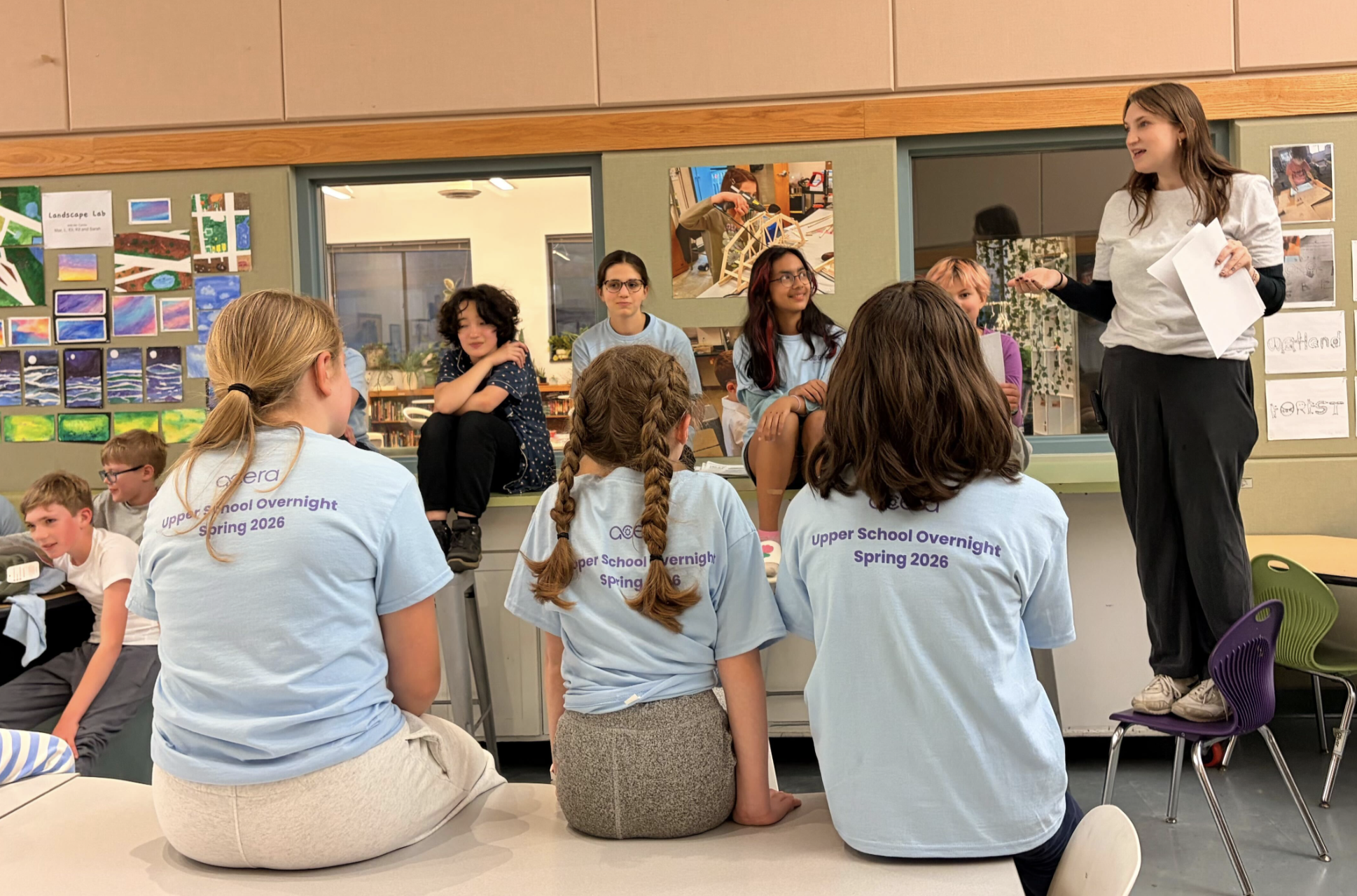
Just last week, we gathered for the IMPposium, where our Upper School students shared the culmination of months of inquiry, creativity, and perseverance. Through the IMPp process, students are invited to brainstorm, research, pitch, create, revise, and ultimately bring an idea to life. It is a level of trust, responsibility, and intellectual freedom that many students do not encounter until high school—or beyond.
Why do we do this? Because we take children seriously. It is an act of respect.
We believe that young people are capable of meaningful work. We believe they deserve authentic opportunities to pursue questions that matter to them. We believe they can contribute ideas, insights, and solutions that enrich our community. We believe they are worthy of being seen, heard, loved, and respected.
As Russell Shaw concludes, there are four reminders worth carrying with us as adults:
- Take kids seriously.
- Let them be right sometimes.
- Distinguish between disagreement and disrespect.
- Notice what you reward.
As this school year comes to a close, I find myself grateful for a community that embraces those ideals.
Thank you for sharing your children with us. Thank you for the trust, partnership, and care you bring to this work. And thank you for helping us build a school where students are truly seen, heard, loved, and respected.
Related Posts