
By Dr. Heather J. Pinedo-Burns, Head of School Over the past few weeks, we have…
Peek into Lower School Science with Room 7: Life in the Amazon!
by Heather J. Pinedo-Burns
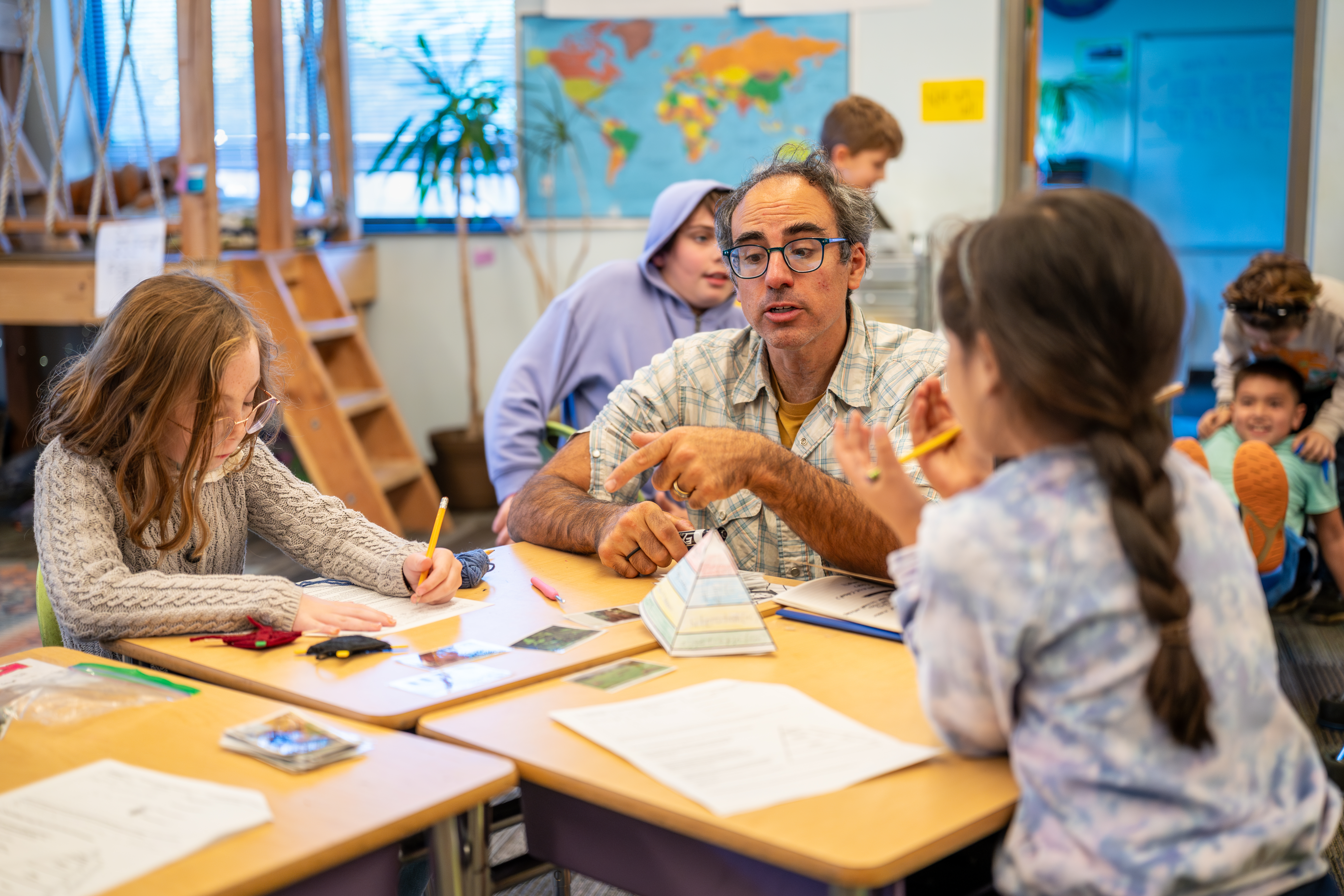
In Lower School Science with Mr. Aaron, Room 7 Lower School students are deep in an exploration of nature’s ecosystems—and recently that adventure took them straight to the heart of the Amazon Rainforest!
Using custom-made Rainforest Animal Cards, students learned about the incredible diversity of species that live in this vibrant ecosystem. Each card featured fascinating facts about an animal’s diet and role within its environment, which helped students as they sorted species into producers (like plants and trees) and consumers (animals that eat plants or other animals).
Working in small groups, students then constructed their own mini-ecosystems—adding animal and plant cards to build balanced food chains. Just as things began to stabilize, Mr. Aaron introduced impact cards: seasonal changes, cattle ranching, road building, or subsistence gardening. With each impact, students analyzed how human activity or environmental shifts might alter their ecosystem’s delicate balance.
This hands-on lesson blended Literacy, Biology, Conservation, and Environmental Science through a systems lens, giving students the chance to think critically and problem solve as they collaboratively grappled with real-world questions about sustainability and human impact. By tracing how energy flows through food webs and how ecosystems respond to change, students are discovering that every living thing plays a vital role in maintaining the balance of life on our planet.
Exploring how species shape and sustain the world’s ecosystems—from the lush Amazon Rainforest to the “monstrous” worlds of Earth’s distant past—the Room 7 Scientist are busy studying, researching, creating, and classifying scientific information. Previously the students categorized species into trophic levels within food chains, built 3-D trophic pyramids to visualize energy flow, and documented details about ecosystems found across modern Earth. Next, they’ll journey back through geologic time to reconstruct ancient terrestrial or marine environments—bringing forgotten worlds to life through data, creativity, and discovery. At Acera, Science isn’t just studied; it’s lived, imagined, and made real.