As I reflect on my 16 years founding and leading Acera School (2009–2025), I often…
Inquiry Learning: What Happens When We Let Gifted Students Build the Question?

How do questions fire up students’ minds? Do different types of questions impact learning depth? What, uniquely, do gifted students need to thrive?
Question-driven learning experiences are at the core of Acera. Questions activate engagement—but all questions are not created equal. And the experience of answering them? Very, very different.
The most conventional questions are those with a specific answer sought: “What is the next step to solve this equation?” or “Where did the Vietnam War take place?” These build knowledge. Students listen with the intent to “know” and get it “right.” While useful—and sometimes necessary—these questions can subtly pattern a mindset: that there is almost always a right answer, and their job is to produce it.
Another type? An opinion disguised as a question. “Do you think it was a good idea for that General to make this decision?” Often, the teacher has an answer in mind. Students, again, try to read and match that answer. Whether this opens real dialogue depends entirely on classroom culture—whether inquiry is truly welcomed, or whether correctness still quietly dominates.
Both of these approaches tend to cultivate convergent thinking. There is a place for this—many problems do have established methods and outcomes. But when this becomes the dominant mode, it can limit independence and creativity.
There is, however, another kind of question—one that invites inquiry, dialogue, and discovery. “What are all the different ways you might solve this?” or “How did this event impact different regions over time?” You can feel the shift. Multiple answers can be valid. Students begin to analyze, connect, and interpret.
And then there are questions that may not have a single “right” answer at all: “Where do we see this kind of thinking in real life?” or “What factors led to this event, and how might perspectives differ?” These invite systems thinking and perspective-taking—capacities we all need far beyond school.
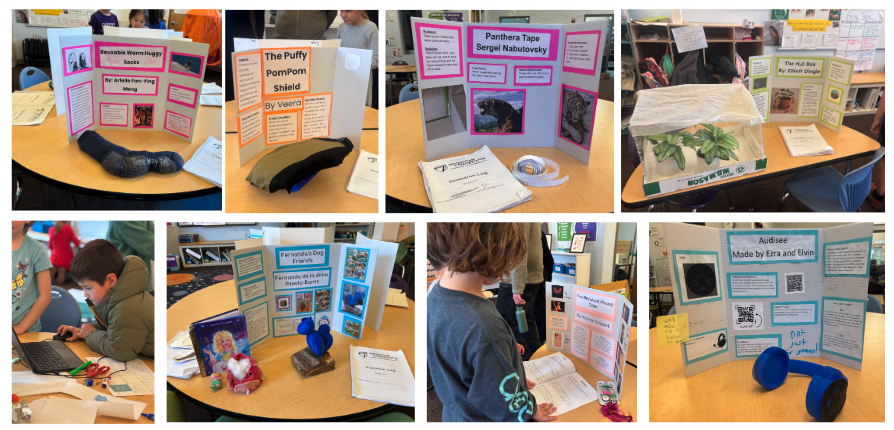
The highest of all, however, may be when the student themselves is able to come up with an inquiry oriented question and then invited to try to answer it in some way. This is what classrooms and teachers can build in students, and is at the core of what kids learn to do over their years in middle school at Acera as part of their Inquiry, Maker, Passion Projects. If well guided by their teachers (who in this case function like mentors not instructors per se), students iterate on their question to come up with one which is truly compelling and which inspires curiosity. (If their question is for a more typical science experiment or research paper, they might need coaching to limit it so that it is “doable” to “answer” for an assignment.) But, for the sake of development of conceptual and critical thinking skills, the deeply engaging questions which students generate – and then own – are where learning Nirvana lies. This develops students into their best selves who can initiate, innovate, and generate authentic and original work down the road. This type of opportunity, for a student, can perhaps be a bit overwhelming at first. Ultimately, student-created inquiry questions are ones which bring about authentic engagement, deep learning, and truly tap intrinsic motivation. This is where gifted students truly thrive and fits with what they crave to be allowed to do – ideally at school. When this can happen during the school day, gifted students don’t just sit through classes to wait for school to be out so they can do the cool stuff – they can gnash their teeth on inspiring topics at school.
Here is a well-known model of different types of questions, adapted from Peter Senge’s Fifth Discipline Fieldbook (which I highly recommend): https://www.willow-group.com/uploads/1/3/0/7/13073207/advocacy_and_inquiry.pdf
This kind of work can feel expansive—even overwhelming at first. It takes real teaching expertise to guide it well. But when it works, it leads to something powerful: authentic engagement, deep learning, and intrinsic motivation. Students begin to own their thinking. They initiate, innovate, and create.
For gifted students especially, this matters. When learning is limited to recall or overly constrained questions—particularly when the content is not sufficiently challenging—it can lead to disengagement or even discouragement. Many thrive when they can move quickly through foundational knowledge and “run up” into analysis, application, and creation.
Questions shape the learning environment—whether in a classroom discussion or, more powerfully, in project-based, simulation-rich, student-driven work. What kind of classroom would you want to be part of?
Authentic inquiry-driven approaches (those which inspire divergent rather than merely convergent thinking) is at the heart of the Acera model. Deep inquiry questions catalyze whole new ways of thinking and understanding. Through the years at Acera, kids learn to think this way, stay motivated and curious, and pattern habits of engagement and initiative which lead them to truly be able to contribute their talents to make the world better. They will have “grown up” in a place where this is possible.
We are starting to see what this turns into as some of our early students emerge into the world in their twenties – and the richness of their thinking and how this elevates their impact truly inspires us as we follow our Acera Alums!
Be well, All!
Courtney Dickinson
Courtney Dickinson is the Founder and Former Head of School of Acera. She currently is on the Board of Directors for Acera School and is the Board Chair of AceraEI (Acera Education Innovation), a 501(c)(3) nonprofit organization.
Related Posts