As I reflect on my 16 years founding and leading Acera School (2009–2025), I often…
Send Kids Outside to Boost Health and Happiness
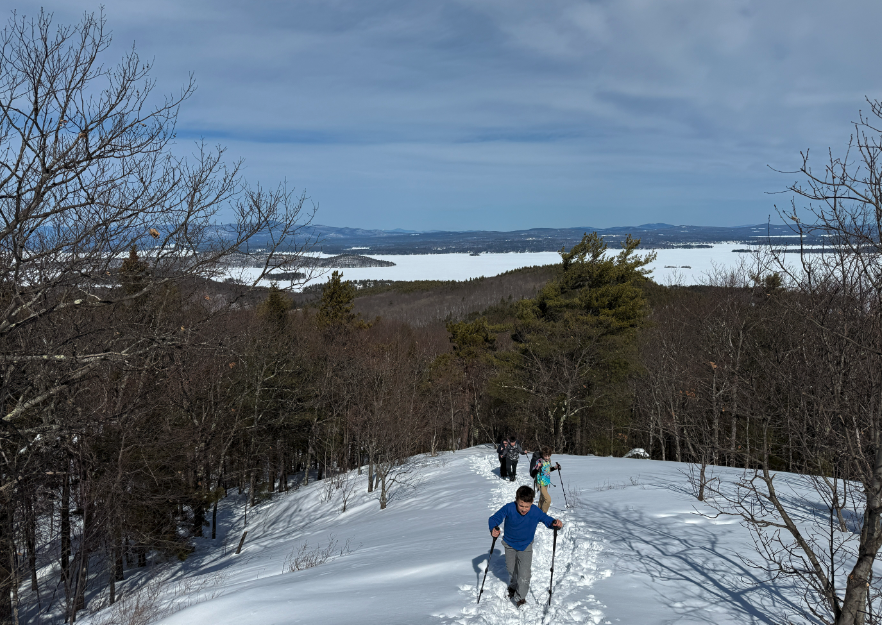
Dave Fatula is a valued collaborator and partner of Acera School. His philosophy of getting students outside for unstructured, free play aligns closely with Acera’s approach through Team Free Play and our Adventure Playground. We share a belief that this kind of open-ended outdoor experience is essential for creativity, resilience, and joyful learning.
GUEST BLOGGER: Dave Fatula, Founder, Guineafowl Adventure Company
If recess was your favorite subject in grade school, we get it. And it turns out that time spent outdoors is good for kids’ physical, mental, and emotional health. In addition, researchers have found that spending time outside – especially engaging in “free play” – helps kids grow healthier and happier.
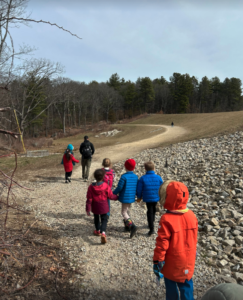
Creating a safe space for kids to engage in outdoor free-play is the idea behindGuineafowl Adventure’s youth programming. We’ve researched the best practices in outdoor youth programming and developed opportunities for kids to connect with nature, each other, and themselves in meaningful ways.
Supporting Physically Healthy Kids
The Great Outdoors is expansive; it goes on for miles and miles in all directions. You might even say outdoor play is a free gym membership for kids. While hiking, climbing trees, and splashing in creeks, kids build physical strength, improve balance and muscle development, and prevent childhood obesity.
While 60 minutes of play in a gymnasium can be part of a healthy lifestyle, 60 minutes of free play outside provides kids with benefits they can’t get under the glow of fluorescent lights. Uneven terrain and gentle to steep climbs and descents challenge our bodies in ways that aren’t easily reproduced in gym class. Hiking also distracts kids from their physical effort with awe-inspring sights and sounds of nature.
The benefits of time spent in nature aren’t just physical; they’re physiological, too. In moderation, our bodies use daily sun exposure to make vitamin D, an essential vitamin in bone development and immune system function. “Sun exposure also plays a role in our immune system in other ways, as well as in healthy sleep and in our mood. Our bodies work best when they get some sunshine every day,” Dr. McCarthy of Harvard Health suggests.
In short – outdoor play results in physically stronger, healthier kids. This may sound obvious if you’ve worked out recently, you know that physical activity builds muscle and improves bone density. However, imprinting habits on young people helps them commit to a healthy lifestyle into adulthood. Moreover, it’s these kinds of healthy habits rooted in the outdoors that can also improve kids’ mental resilience.
Improving Kids’ Mental Health
A growing body of research – and anecdotal evidence – shows that time spent engaged in outdoor play improves problem-solving, communication, and emotional intelligence. In addition, kids who can connect with nature are more conscientious of others and the world around them.
Dr. Ming Kuo, director of the Human Health Landscape at the University of Illinois, researches the intersection of humans and their environment. She believes even a small amount of outdoor time can significantly impact kids. One study impactful to her work was conducted with a group of fifth-grade students.
Compared to their conventional classroom counterparts, the students who attended an outdoor school “showed stronger reading and writing skills (as measured by standardized tests) and reported feeling more excited about school because of the experience. In addition, students at the outdoor school who’d previously had low attendance rates ended up with higher attendance, too,” Kuo explains.
Additional research suggests the positive impacts can last well into adulthood. For example, a Danish study that looked at the effects of residential green space on the prevalence of psychiatric disorders in kids and teens found a strong correlation. Their research showed that “exposure to green space may influence mental health through both psychological and physiological pathways, as green spaces serve as settings for individual and social behavior and can mitigate negative influences of other aspects of the physical environment.”
We recognize that access to green neighborhoods isn’t possible for everyone. But we want to make access to the outdoors possible for every child. That’s why Acera partners with Guineafowl Adventure Company to provide our students with hiking and trail running programming that bridges the gap between kids and the outdoors. We are proud to offer a variety of opportunities for students to get out and explore through morning trail running clubs, afternoon hiking clubs and our in-school Wednesday Creativity Stations. Hiking and trail running are gateways to a deeper connection with nature.
Contact us to learn more about connecting your child with nature through the Acera School and Guineafowl Adventure’s guided outdoor experiences.
Related Posts